The Transitory Nature of Flowers: Still-life photography as a visual study of the beauty of impermanence.
For my Photography MA program’s research project, I hope to make a series of emotionally resonant portraits of flowers. The project will directly relate to my interest in visually capturing the beauty of transience.
One of the primary concerns of my photography practice is to visually illustrate the Buddhist concept of Mono No Aware — the appreciation for the ephemeral nature of things. Mono No Aware has aptly been described as "a flicker of intense light that may shine brightly, but only for an instant, resulting in a powerful emotional experience that can only be felt in the brevity of it.”(Andrijauskas, 2003) In many cultures, the flower is seen as a representation of impermanence. For example, in Japan, the Buddhist-influenced art of Ikebana, or flower arrangement, is said to capture the essence of transcience "by using seasonal flowers or plant materials that symbolise the cycle of birth, growth, decay, and renewal." (Kumari, 2025) The cut flower exists in a state of suspension, hovering between life and death. If successful, my flower studies will allow viewers to experience beauty within the context of the transitory nature of existence. Still-life photography of flowers is a most fitting subject matter to explore this objective further.
I am also greatly interested in the carefully composed and considered portrait and fascinated by the idea of photographing flowers as a form of portraiture. Portraiture photography is often described as the art of capturing a person's essence and personality. I will look to apply this to the flower instead. Regarding portraiture photography, David Bate writes that "the meanings of the image are always corrupted by these processes of spectatorship, so that the viewer invests meaning based on their relation with the signifying elements of the extant portrait." (Bate, 2009, p.106). I hope to create portraits that will allow viewers to consider and appreciate the ephemeral nature of life.
Photographing portraits of flowers as a study of the nature of impermanence is a concept I have been drawn to for a couple of years. I made some attempts at this during that time, but they did not yield satisfactory results. Spending considerable time on this project in the coming year should enable me to produce a cohesive, and hopefully successful, body of work.
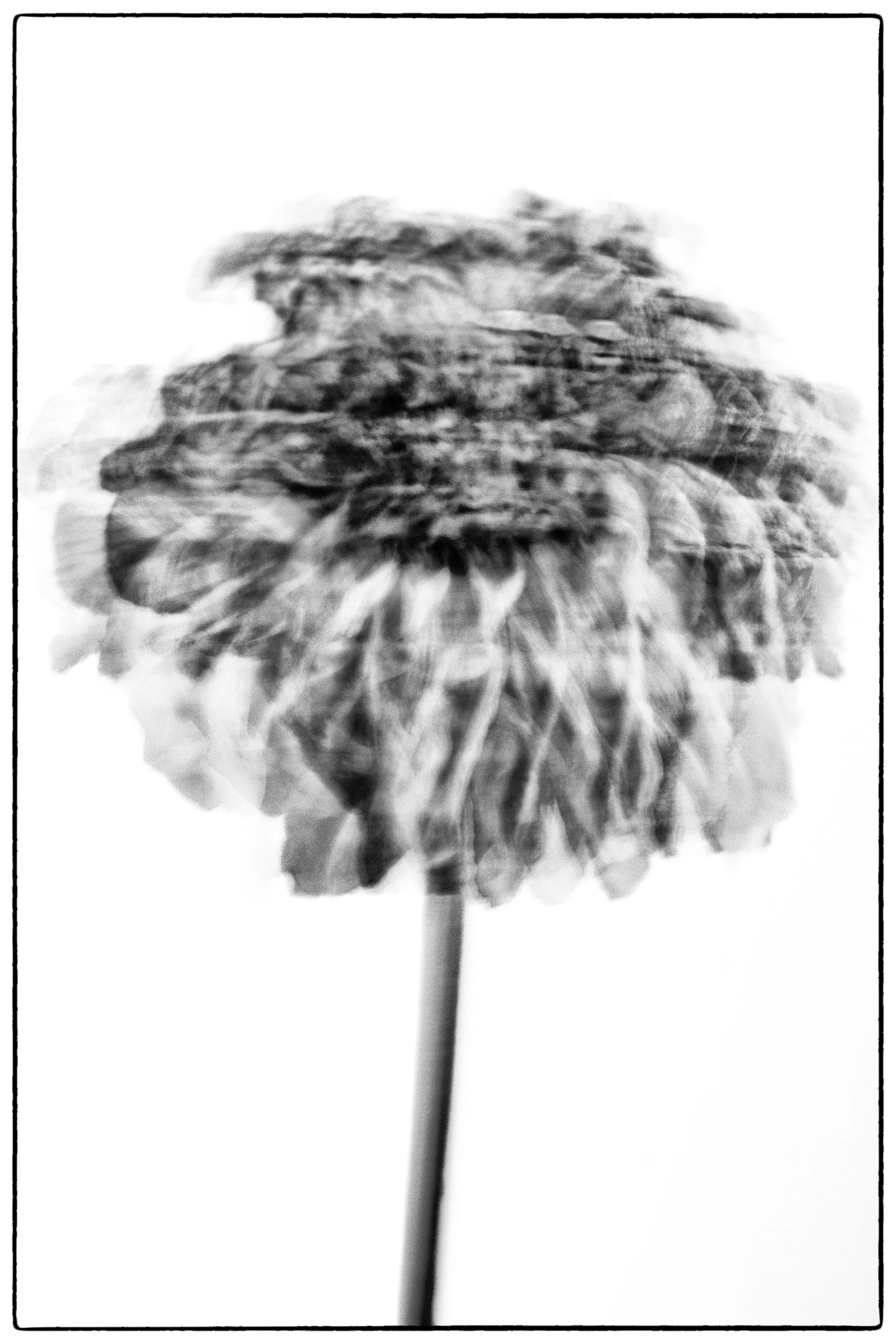
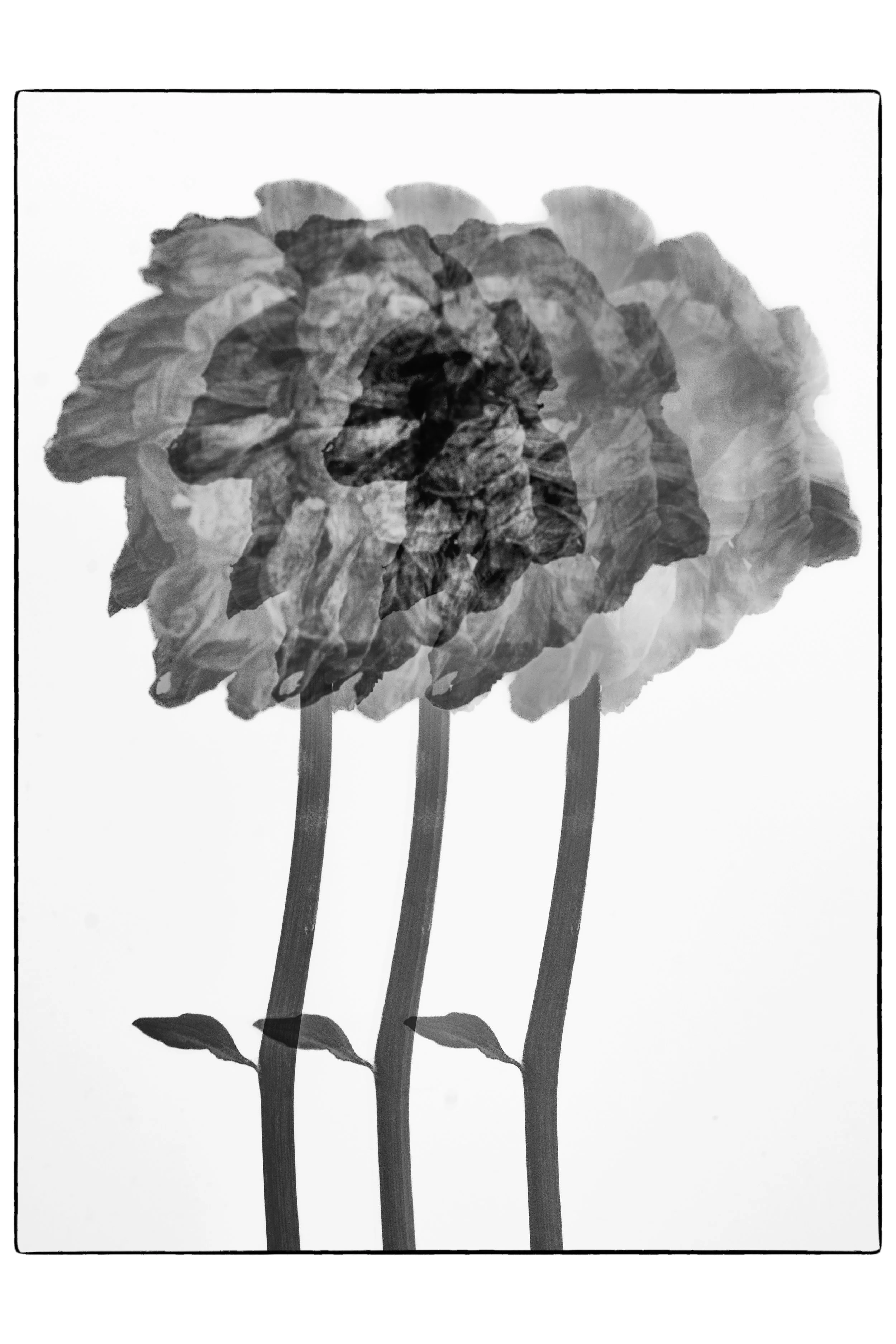
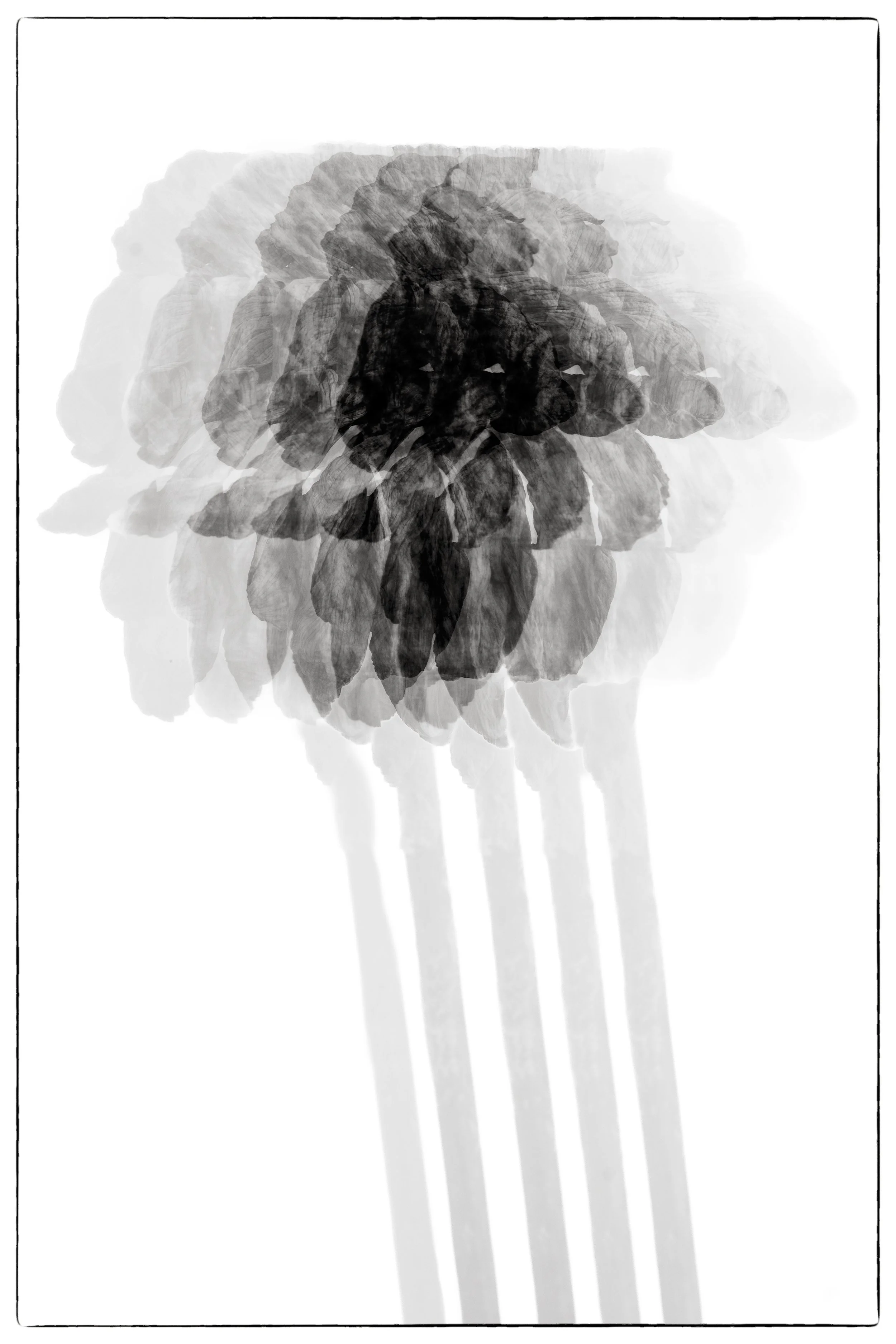
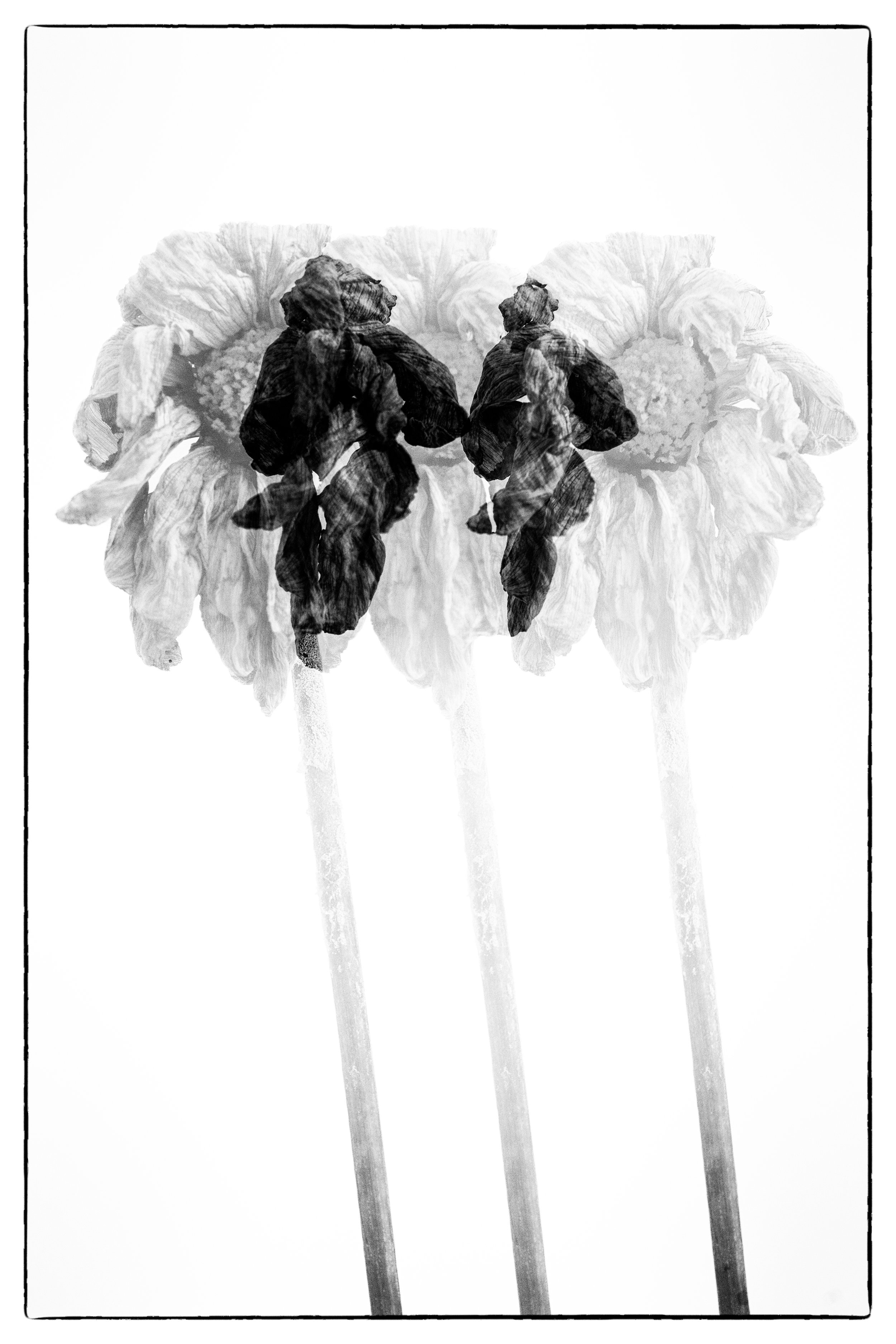
Below is a set of visual experiments that play with time and our perception of it. They are made using intentional movement of the flower alongside in-camera multiple exposures. Click on each image to enlarge.
More photos, and more ramblings on the subject of still life photography as a visual study of impermanence, coming soon.
References
Andrijauskas, A. (2003). Specific Features of Traditional Japanese Medieval Aesthetics. Dialogue and Universalism, 1-2(2003), pp.199–220.
Barthes, R. (1980). Camera Lucida: Reflections on Photography. New York: The Noonday Press, p.92.
Kumari, C. (2025). The Silent Language of Flowers: Buddhist Soul of Ikebana. THE MAHA BODHI (The International Buddhist Journal), 134(2), pp.19–23.